Throughout cinema’s entire existence it has served as a mirror for all aspects of society, from cheesy and overdone music biopics to grand, historical epics, films show us. They show our icons, our values, our failures, our loves, our guilty pleasures. Cinema is life in motion.
In my opinion, the most dynamic reflection in the art form is the ever changing depiction of catastrophe, specifically in satire. Two of my favourite films within this unbelievably niche sub genre are Dr Strangelove: Or How I Learned To Stop Worrying And Love The Bomb (1964) and White Noise (2022). Both films tackle the idea of catastrophe within the satire genre but the actual substance of both are wildly different.
Catastrophic Story Telling
Unsurprisingly, civilisation has been obsessed with catastrophe since the start of time. Many ancient cultures contain stories about mass floods, untameable fires and utter apocalypse’s that were shared down through generations as a way to try and comprehend the actual existential threats they faced. Myths, from Mesopotamian floods to Greek Gods destroying Earth, have acted as reflections of fear and uncertainty that are unique to that specific time. Naturally, as time passes and technology advances at breakneck speed, these fears change and shapeshift into something that matches the zeitgeist. Society no longer fear divine retribution or other deified attacks, no, we fear… Ourselves. Like a snake biting their own tale, mankind is the greatest threat to Earth.
Cinema about catastrophe has changed to reflect these evolving fears, with satire being a particularly potent tool to critique the lunacy of the current climate. This is because the comedic exaggerations help reveal actual, deeper truths, truths that actually aren’t even that exaggerated in retrospect but truths that are hard to articulate directly.
King Kubrick
Dr Strangelove: Or How I Learned To Stop Worrying And Love The Bomb (1964) by Stanley Kubrick is one of my favourite films ever and, debatably, the best satire ever made. Set in the nuclear paranoia soaked 60’s, the film features a range of different idiotic, belligerent political and military figures, from a foolish US president and an incapacitated Nazi scientist to insecure generals and violence loving bomb squad pilots, Kubrick shows it all. Lost in bureaucracy yet dangerously irrational. It opens with General Jack D. Ripper (great comparison) ordering a nuclear strike on Russia, completely bypassing military command because he has a mounting suspicion that the Russians are poisoning American citizens by putting fluoride in their water (a conspiracy that is actually still spouted to this day). Our leaders are not infallible, Kubrick knows this. Our fate is in the hands of a dozen crazy men and their temperaments and well, in this story, the general is a paranoid man with power, a theme that still rings true to this day.
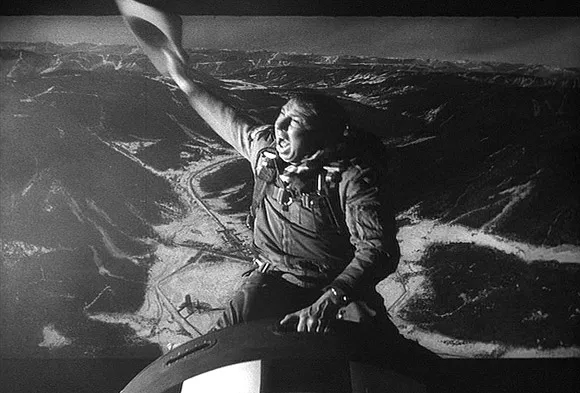
Moreover, Major Kong, the bomb squad pilot, rides the bomb down to the ground, hat waving in the air. Kubrick chooses to depict the dropping of the bomb like a cowboy riding battle, the ultimate american ‘hero’ riding ultimate disaster into the ground.
I really could spend all day analysing each character, please watch it if you haven’t already. Kubrick has the US president and Russian leader flirting and threatening over the phone, Nazi scientists creating weapons of mass destruction whilst still having a penchant for the extreme and the fantatic Peter Sellers playing multiple roles.
Dr Strangelove: Or How I Learned To Stop Worrying And Love The Bomb (1964) is timeless and beautifully exposes how human error and ego can easily start the beginning of the end. The absurdist comedy on display really forces the audience to question the capabilities and recklessness of the institutions that govern us. Maybe they don’t have our best interests at heart. Maybe they aren’t more knowledgeable than us. Maybe they aren’t more moral than us. It’s some food for thought.
Baumbach X DeLillo
White Noise (2022) by Noah Baumbach is my favourite modern satire, which is funny because it is actually an adaptation of the book with the same name from 1985. I say it’s funny because the story is so acutely aware of the problems we actually face now, it’s insanely prescient for releasing in the mid 80’s.
The film satirises the rise of misinformation and the actual comfort that people can take in it; “family is the cradle of the worlds misinformation” being an actual line of dialogue in the film and a great one at that. It also highlights the overwhelming saturation of media and the existential fear of death and how they are, ultimately, intrinsically linked. Baumbach (and DeLillo) portray the flood of information and news in the modern world to actually cause inaction and disconnection from reality, with it all being to much for us to comprehend. Aldous Huxley was an early harbinger of this doom, with his book A Brave New World (1932) echoing a lot of similar themes, from mass information confusing and placating citizens to miracle drugs that seem to heal all. In A Brave New World (1932) this drug is called Soma but in White Noise (2022) this drug is called Dylar.
Babette, one of the main characters of the film and the family matriarch, is addicted to dylar, an experimental drug that supposedly cures the fear of death. This is a fantastic story thread because, whilst dylar is a mysterious pill in the film, it’s actually representative of a larger issue in the world; a very real issue. Distraction. Distraction from self. Distraction from death, but most of all, distraction from living. We are fascinated and terrified about death, we do everything we can to run away from it, shun it away from our thoughts but it’s the only inevitability in life. We bite our thumb at the very essence of what it is to be human, the one thing that connects all living things, DEATH. It’s the tax we pay to be alive. The fact that flowers die is the very reason why they have meaning as a gift. Flowers are not immortal, they will die even in perfect vases and fresh water; the beauty in them is watching them whilst they are alive in the fleeting now. To be alive is to be aware of death and still plod along anyway, to reckon with the knowledge that it will all some day end. Not hide from it. Phones and social media appear to be our dylar in the real world.
The town supermarket, home to many different scenes, is another great example of distraction, this time through the guise of consumerism. Endless aisles are stocked with hundreds of different brands sporting lovely colours. The heart of the town succumb to this dizzying haven of saturation because it allows them to ignore the outside world. They can parade around the shop, spend hours debating over which cereal to get, which toilet roll is better value for money or what flavour of jellies are the best and ignore the actual pressing issues, like the airborne toxic event in the film. It’s the ultimate distraction. One that is present in our actual world, unlike dylar.
The film amazingly posits how a media saturated world with constant misinformation and targeted consumerism can blind us to existential threats.
Evolution Of Anxiety
Both films discussed, perfectly represent the unique anxieties of the time. Dr Strangelove: Or How I Learned To Stop Worrying And Love The Bomb (1964) satirised the very real threat of nuclear warfare and exposed the deep mistrust of the public in governmental handling of global security. This topic dominated the public consciousness as the Cold War veered it’s ugly head into newsrooms and, subsequently, households all over the world. White Noise (2022) tackles contemporary anxieties around environmental collapse and media saturation, where misinformation exacerbates societal fears. These are the two topics that now seem to fill all the available air time.
Whilst satirising two different catastrophes, both films actually share similar, deeper musings. Both reveal how institutions, whether government or big corporate conglomerates, fail to actually address the true threats facing society… Themselves.
Use Of Absurdism
Carrying on with the similarities, both use humour and absurdism to highlight serious societal issues. Kubrick uses paranoid generals and foolish leaders to expose the recklessness of military policies and the insanity of Cold War logic. Baumbach uses pretentious academics to critique how ‘intellectuals’ hide behind their pontifications so they don’t have to address and live in the real world. They are consumed by trivial distractions like the history of icons to avoid the ultimate catastrophe, death.
They both use humour and absurdism to show audiences how crazy our self defences are and how serious the issues at hand really are.
Shifts That Shape Narratives
Political and cultural shifts dramatically influence how satire in film addresses societal fears and anxieties. During the Cold War, the fear of complete nuclear annihilation was the main issue, which directly led to Dr. Strangelove: Or How I Learned To Stop Worrying And Love The Bomb (1964); which satirised the absurdity of military bureaucracy and the actual possibility of global destruction because of nuclear warfare. The political climate of the sixties was marked by paranoia and distrust, so it entirely makes sense why the film critiques the choices and behaviour of military leaders. Kubrick uses dark humour to challenge the belief that authorities are infallible, specifically with controlling nuclear weapons.
Constrastingly, modern satires like White Noise (2022) reflect modern and updated anxieties, some that have since been heightened due to the COVID 19 pandemic. Invisible threats, such as: environmental collapse, media misinformation and media manipulation feel much more relevant now than nuclear warfare. White Noise (2022) aims to critique the sheer amount of information that we have access to, highlighting how the proliferation of demonstrably false information through the media can exacerbate fear and confusion. The fear throughout this film isn’t a nuclear bomb; it’s the slow, inevitability of death, framed through the lense of an airborne toxic event.
This shift is representative of how society now perceives and reacts to crises’. People generally don’t worry about tangible geopolitical issues anymore, not as much as they used to anyway. Their news feeds are crammed with so much information about ongoing wars, conflicts and disasters that they have become desensitised and detached. The issues at the forefront are now more existential and internal; such as: climate change, mental health and environmental collapse. Another example of this shift is in Don’t Look Up (2021) by Adam McKay. In the film, a comet is discovered to be headed on a warpath to destroy Earth but the issue is treated with apathy and denial by the public and government until it’s far too late.
These two films, separated by six decades, show how satire adapts itself to suit different political climates. Satires about catastrophe, no matter how much it has changed, still continues to be an effective tool for engaging audiences in discussion about the state of the world.
Conclusion
Satire has served as a powerful storytelling tool since film was created. It’s the perfect vehicle to critique and reflect society’s most pressing issues. From Dr. Strangelove: Or How I Learned To Stop Worrying And Love The Bomb (1964) to White Noise (2022), satire has stood the test of time and continued to evolve around the current political climate of the time. The dark humour in satire disarms audiences and allows them to engage with uncomfortable topics that would otherwise have been too overwhelming or come across as ‘preachy’. As global crises’ continue to shape the world, whether they are related to politics, military or the environment, satire will undoubtedly adapt and remain an important medium to confront societies’ deep anxieties. The future of satire lies in its continued ability to hold a mirror to the world and challenge its most urgent concerns.